Nutrition is no longer just about calories and macros—it’s about personalization, sustainability, gut health, and long-term resilience. From functional beverages to regenerative agriculture, today’s nutrition landscape is being reshaped by science, technology, and shifting consumer values.
At Superway, we track early signals across food, wellness, and health innovation. These seven nutrition trends stand out for their momentum, credibility, and real-world impact—and they’re redefining how people eat, drink, and think about nourishment.
1. Tri-Biotic Beverages Are Redefining Functional Drinks

Category: Functional Drinks
The functional beverage category is evolving beyond simple probiotic claims. Enter tri-biotic beverages, which combine prebiotics, probiotics, and postbiotics into a single formulation.
- Prebiotics fuel beneficial gut bacteria
- Probiotics introduce live cultures
- Postbiotics deliver beneficial byproducts like short-chain fatty acids
This multi-layered approach reflects a more sophisticated understanding of gut health, immunity, and metabolic function. Brands are investing heavily in shelf-stable formulations, transparent strain labeling, and clinically backed benefits—moving functional drinks from niche wellness products into everyday consumption.
Why it matters: Gut health is no longer a supplement-only conversation. It’s becoming drinkable, accessible, and routine.
2. Sustainable Sourcing Is Reshaping the Superfood Market

Category: Environmental Nutrition
Consumer demand for superfoods like quinoa, chia, cacao, and moringa is no longer driven by nutrition alone. Increasingly, buyers want to know where food comes from, how it’s grown, and who benefits.
Ethically sourced superfoods emphasize:
- Fair trade and farmer equity
- Reduced water and land impact
- Biodiversity protection
This shift is pushing brands to re-evaluate global supply chains and invest in transparency, traceability, and certifications.
Why it matters: Nutrition and environmental responsibility are becoming inseparable. Sustainable sourcing is now a competitive advantage, not a bonus.
3. Probiotics Are Going Mainstream in Everyday Diets

Category: Gut Health
Once confined to supplements and yogurt, probiotics are now embedded across daily meals—from fermented vegetables and sourdough to snacks and meal kits.
Growing evidence around the gut-brain axis has accelerated interest, linking digestive health to mood, immunity, and cognitive performance. Consumers are prioritizing foods that offer functional benefits without adding complexity to their routines.
Why it matters: Gut health has crossed into the mainstream, shifting from reactive treatment to daily prevention.
4. Microplastic Contamination Is Influencing Seafood Choices

Category: Food Safety
Rising awareness of microplastics in seafood is changing how consumers approach fish and shellfish consumption. Research suggesting potential impacts on nutrient quality and long-term health has sparked concern—especially among health-conscious and environmentally aware buyers.
As a result, we’re seeing:
- Increased scrutiny of seafood sourcing
- Growing interest in smaller fish and alternative proteins
- Demand for cleaner, traceable supply chains
Why it matters: Food safety conversations now extend beyond pathogens to environmental contamination, reshaping purchasing behavior and regulation.
5. Adaptogen-Infused Functional Foods Are Gaining Traction
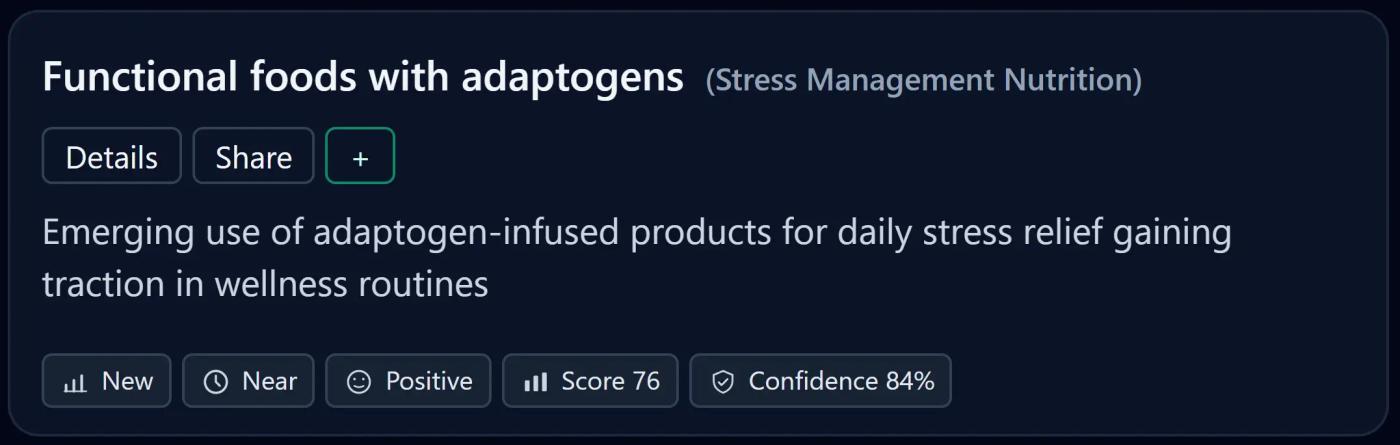
Category: Stress Management Nutrition
Adaptogens—such as ashwagandha, rhodiola, reishi, and lion’s mane—are moving from supplements into everyday foods and beverages.
Consumers are seeking subtle, sustained stress support rather than quick fixes. This has led to adaptogens appearing in:
- Coffees and teas
- Snack bars and chocolates
- Ready-to-drink wellness beverages
Why it matters: Mental wellness is becoming an everyday nutrition priority, and food is emerging as a primary delivery system.
6. Genetic Testing Is Powering Personalized Nutrition
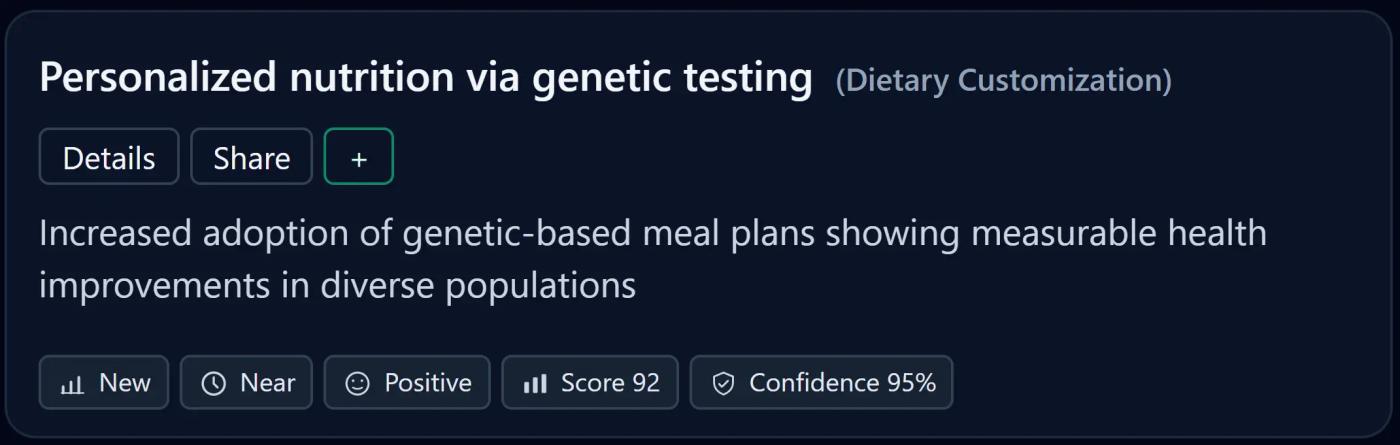
Category: Dietary Customization
Personalized nutrition has taken a major leap forward with the integration of genetic testing. Consumers are increasingly using DNA insights to tailor:
- Macronutrient ratios
- Micronutrient needs
- Food sensitivities and performance optimization
Unlike generic diet plans, genetic-based recommendations are showing measurable improvements across diverse populations, helping bridge the gap between data and daily behavior.
Why it matters: One-size-fits-all nutrition is fading. Precision, personalization, and proof are defining the future of dietary guidance.
7. Regenerative Agriculture Is Reframing Food Quality
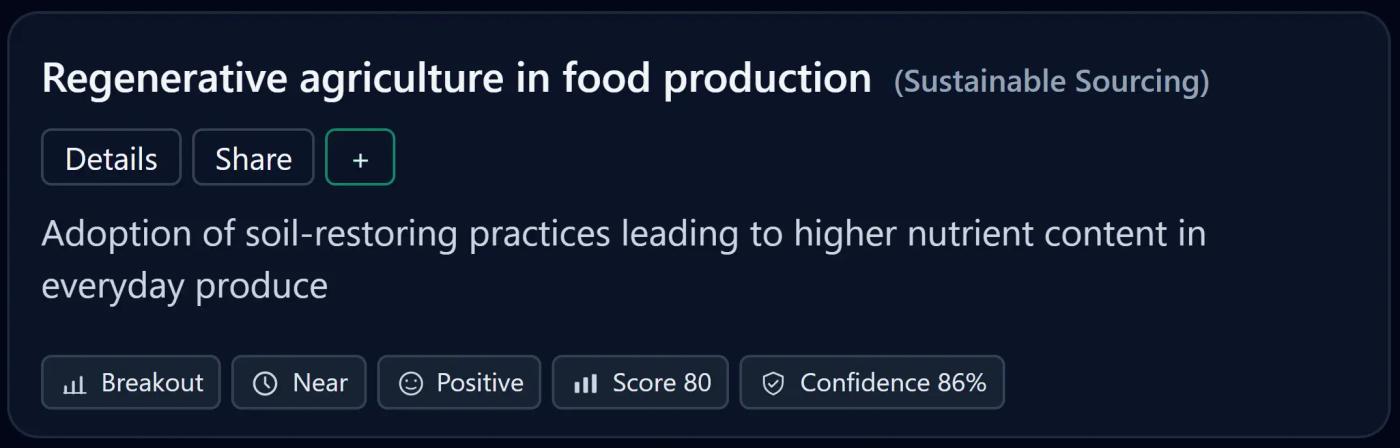
Category: Sustainable Sourcing
Regenerative agriculture focuses on restoring soil health, increasing biodiversity, and improving nutrient density—not just sustaining yields.
Practices like crop rotation, reduced tillage, and cover cropping are gaining traction as research links healthier soil to more nutrient-dense food. Brands adopting regenerative sourcing are positioning themselves at the intersection of nutrition, climate impact, and long-term food security.
Why it matters: The future of nutrition starts in the soil. Regenerative practices are redefining quality from the ground up.
Nutrition Is Becoming Smarter, Cleaner, and More Personal
Across all seven trends, one theme is clear: nutrition is evolving from consumption to intention. Consumers want food that supports their biology, aligns with their values, and contributes to long-term well-being.
At Superway, we track these shifts to help brands, builders, and investors stay ahead of what’s next.
The future of nutrition isn’t just healthier—it’s more connected, data-driven, and sustainable than ever before.