The fitness industry is undergoing one of its most dynamic evolutions in years. Consumer expectations are shifting, new technologies are maturing, at-home and gym ecosystems are blending, and wellness culture is expanding into every corner of lifestyle and workplace culture.
Superway.ai’s real-time trend engine has been monitoring these shifts across social channels, product demand signals, influencer discussions, search behavior, and cultural sentiment. This report distills the 9 fitness trends accelerating toward 2026, each backed by SuperSense insights and data, giving brands, creators, and operators a competitive advantage.
1. Sustainable Fitness Apparel
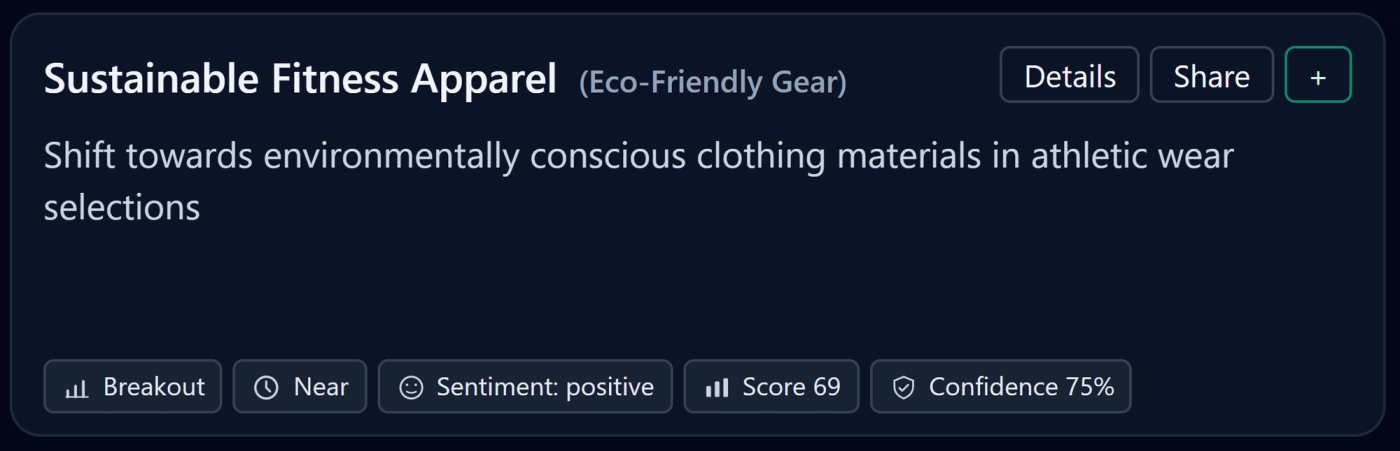
Eco-conscious performance wear is becoming the new baseline.
Sustainability has transcended niche status—it's now a defining consumer priority in fitness apparel. A rising share of Gen Z and millennial consumers are actively seeking brands that use recycled fabrics, organic fibers, vegan materials, and carbon-neutral production. This shift aligns with broader climate awareness and demand for transparent supply chains, mirroring trends in online fitness equipment sales.
What’s Driving It
- Younger consumers view sustainability as non-negotiable in athleisure and workout gear.
- Brands like Girlfriend Collective, Athleta, and Pact are pioneering recycled materials and ethical sourcing.
- Influencers are promoting “green workout wardrobes,” increasing visibility in the fitness community.
Key Subtrends
- Recycled activewear fabrics
- Ethical supply chains
- Vegan and biodegradable alternatives
- Carbon-neutral production
2. Plant-Based Protein Supplements
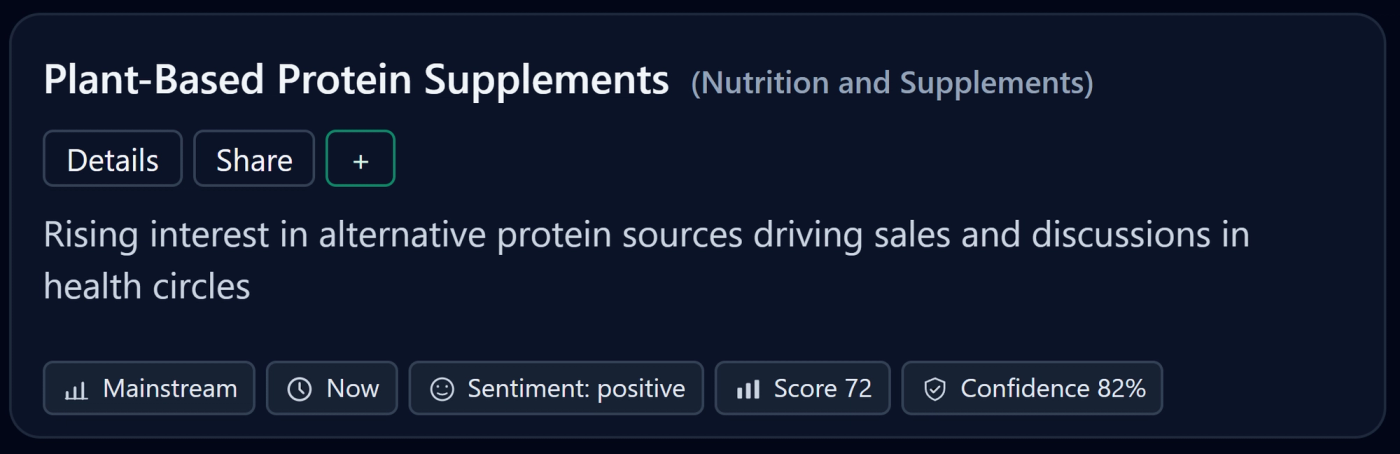
Clean-label, dairy-free proteins are reshaping sports nutrition.
The US fitness community is rapidly shifting from dairy-forward supplements to plant-based, allergen-friendly protein options. What began as a vegan trend has evolved into a mainstream preference for sustainable and stomach-friendly proteins. This aligns with broader trends in plant-based nutrition and functional foods.
What’s Driving It
- Rising lactose intolerance awareness
- Demand for sustainable agricultural practices
- Clean-label expectations (non-GMO, minimal additives)
- Flavor and texture improvements making plant proteins competitive
Key Subtrends
- Pea protein dominance
- Amino acid completeness innovations
- Eco-friendly packaging certifications
- Hybrid “plant + mushroom” blends emerging
Brands Leading the Movement
Vega, Orgain, Garden of Life
3. Corporate Wellness Initiatives with Fitness Goals
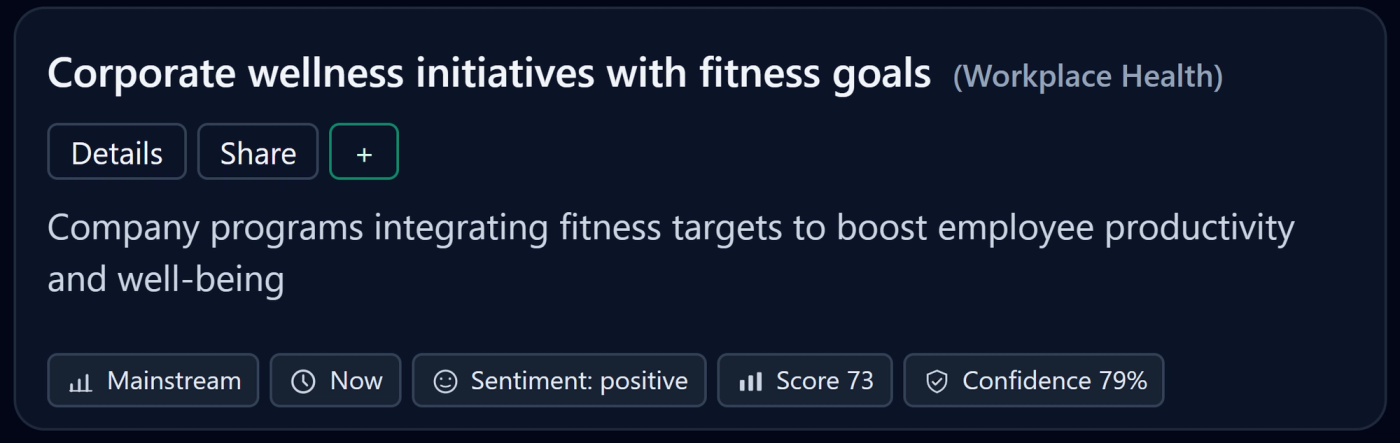
The workplace is becoming a fitness ecosystem of its own.
In the post-hybrid era, companies are increasingly adopting fitness-centered wellness programs tied to retention, productivity, and employee well-being.
What’s Driving It
- Hybrid work makes movement and mental well-being strategic priorities.
- Wearables (Fitbit, WHOOP, Apple Watch) make measurable programs easy to implement.
- Q4–Q1 budget cycles are fueling safety, wellness, and benefits innovations.
Key Subtrends
- Virtual step and movement challenges
- Wearable-based incentivization programs
- ROI calculations tied to absenteeism and productivity
- Partnerships with gyms and digital fitness platforms
- Mental-fitness integration and stress-management add-ons
4. Home-Based High-Intensity Interval Training (HIIT)
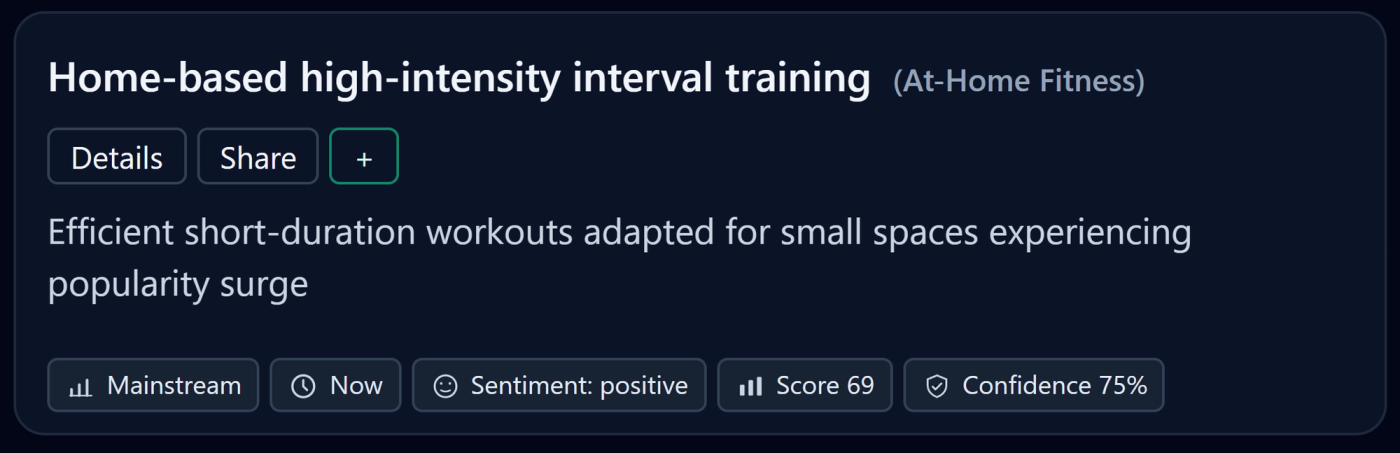
Short, intense, space-efficient workouts continue their reign.
Home-based HIIT is surging again, buoyed by remote work lifestyles, seasonal resets, and a desire for less equipment-heavy routines.
What’s Driving It
- Space-efficient workout culture in urban living
- Social media–driven HIIT challenges
- Trust in bodyweight HIIT for both beginners and advanced users
- Holiday-season fitness interest spikes every Q4
Key Subtrends
- Beginner-friendly HIIT formats
- 10–20 minute micro-routines
- App-based home HIIT integrations
- Hybrid Pilates + HIIT mashups trending on TikTok
5. Recovery-Focused Fitness Accessories
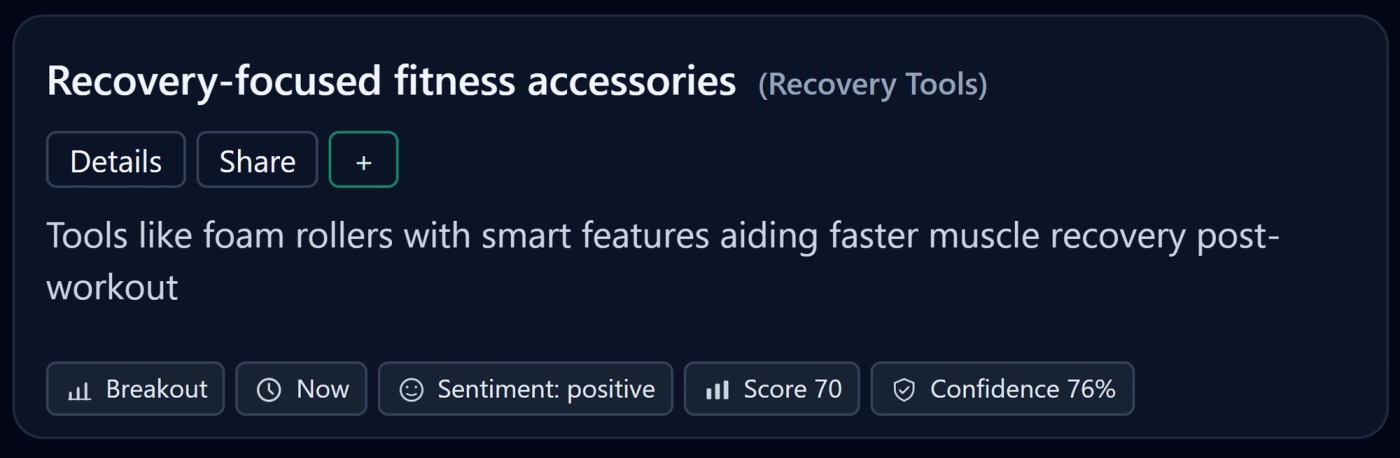
Recovery is becoming as important as the workout itself.
Post-workout recovery tools are experiencing breakout growth, driven by increased injury awareness and rising adoption of recovery-focused content online. This trend intersects with healthcare innovation and preventive medicine.
What’s Driving It
- Post-Thanksgiving and post-holiday fitness resets
- Social media education on longevity and injury prevention
- E-commerce sales momentum for tools like foam rollers and massage guns
Key Subtrends
- Smart foam rollers
- Massage guns with pressure tracking
- Compression boots and cold-plunge setups
- Wearable recovery monitors (HRV-driven insights)
6. Custom Virtual Coaching

AI + human coaching models are becoming fitness’s new premium experience.
The demand for personalized training is exploding, and custom virtual coaching sits at the intersection of remote lifestyle, technology adoption, and the need for accountability.
What’s Driving It
- Growing acceptance of remote fitness habits
- AI-enhanced coaching apps like Future offering hybrid human/AI plans
- Tracking integrations via wearables and app ecosystems
Key Subtrends
- AI-personalized workout plans
- On-demand live video coaching
- Biometric feedback loops
- Subscription-based coaching models
7. Interactive Gamified Workouts
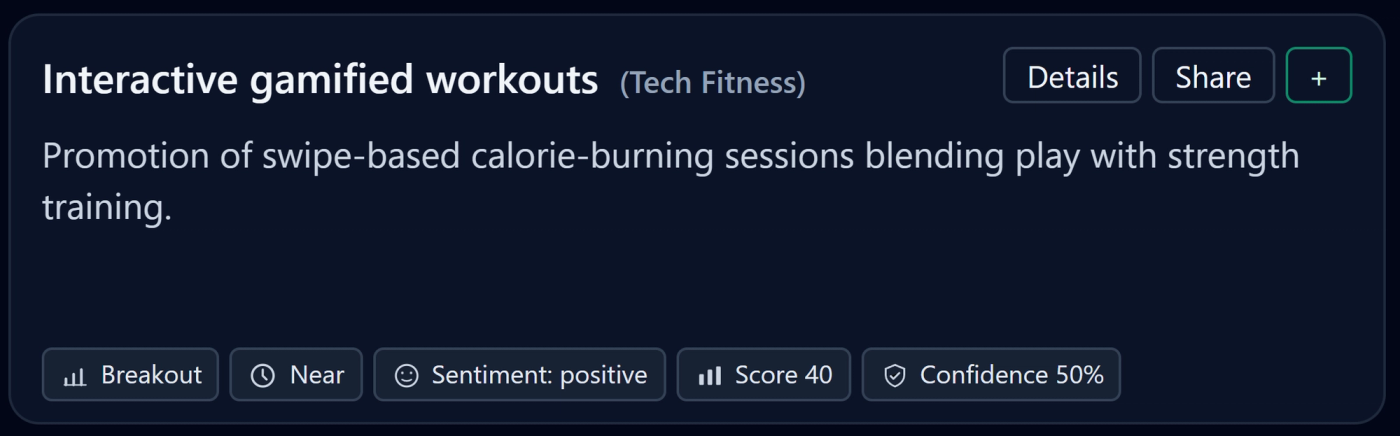
Gamification is redefining motivation and retention.
From point systems to swipe-based calorie burners, gamified fitness is emerging as a powerful engagement tool.
What’s Driving It
- Hybrid home-gym routines need engagement hooks
- Fitness apps are using badges, streaks, and multiplayer elements to improve retention
- Younger audiences respond strongly to game-like mechanics
Key Subtrends
- AR/VR exergames
- Multiplayer group challenges
- Reward-based habit loops
- App leaderboards and ranking systems
8. Virtual Reality Fitness Experiences

Immersion is the next frontier of digital workouts.
VR fitness is entering a breakout phase thanks to holiday headset sales, significant app improvements, and a growing culture of immersive exercise experiences.
What’s Driving It
- Meta Quest holiday promotions
- New content drops from platforms like Supernatural and FitXR
- Growing acceptance of VR as a legitimate training modality
Key Subtrends
- Full-body tracking
- Social VR workout challenges
- Immersive scenery and guided intensity
- Wearable integrations for real-time biometrics
9. AI-Powered Workout Personalization
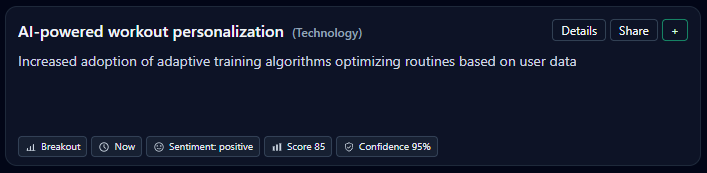
The most transformative shift in fitness personalization—powered by machine learning.
AI-driven fitness is one of the strongest signals in Superway.ai's dataset, fueled by new app features, holiday promotions, and the push toward hyper-personalized exercise routines. This reflects the broader movement toward AI-powered personalization across industries.
What’s Driving It
- Adoption of wearables fueling richer datasets
- Apps like Future, Fitbod, and Apple Fitness+ integrating adaptive systems
- Interest in biometric-based, real-time adjustments
Key Subtrends
- Adaptive training algorithms
- Real-time form analysis
- Predictive recovery and progressive overload planning
- AI coaches customizing routines based on performance
Why These Trends Matter
For brands, platforms, and creators in the fitness space, these 10 trends signal where consumer expectations, product innovation, and technological capability are heading.
Superway.ai’s insights show a fitness landscape defined by:
• Sustainability
Consumers expect ethical, eco-forward solutions.
• Personalization
AI, coaching, and biotech integrations are becoming the standard.
• Engagement
Gamification and VR experiences keep users committed.
• Convenience
Home-based HIIT, virtual coaching, and micro-workouts match modern routines.
• Recovery and Longevity
Consumers want to train sustainably, not aggressively.
• Workplace Wellness Expansion
Fitness is becoming a corporate investment—not a perk.