At Superway, we track the signals that turn into category shifts. These seven sleep trends stand out for their momentum, relevance, and potential to rewire how people sleep—and how brands build for sleep.
1) Smart Pillows With Adaptive Support
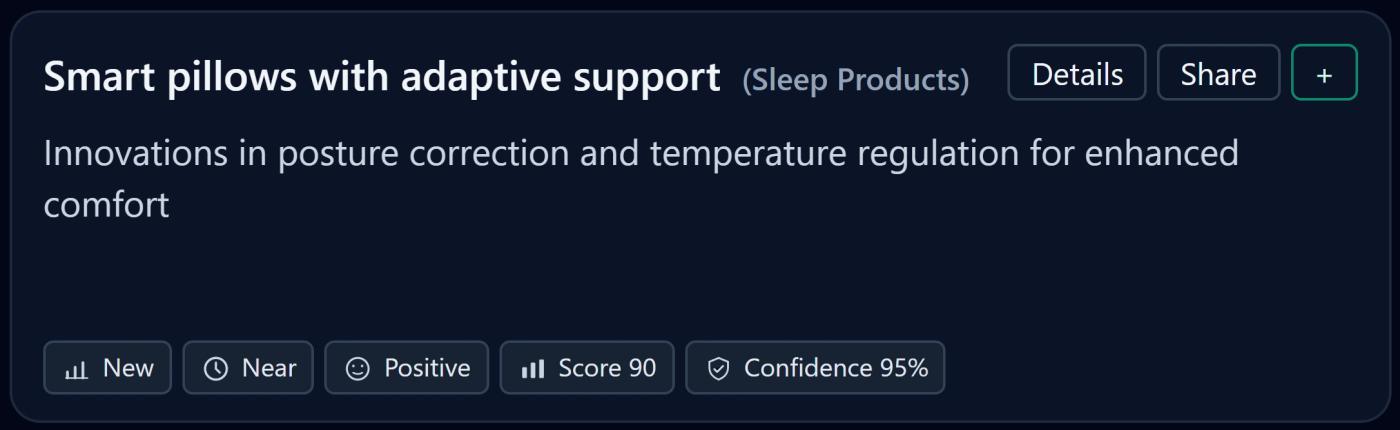
Category: Sleep Products
Pillows are getting “smarter” in two ways:
- Biomechanics: more emphasis on posture, spinal alignment, and neck support
- Thermoregulation: cooling fabrics, phase-change materials, and temperature-aware designs
- Sensors + insights: sleep-position tracking, snore detection, and app-based personalization
The market is moving beyond generic “cooling pillows” into products that attempt to adapt—either through design engineering (zoned support) or tech-enabled feedback loops. Smart pillows are increasingly positioned as a lighter-weight entry point into sleep tech versus expensive smart beds. Lifewire
Why it matters: Sleep optimization is becoming modular. Consumers will assemble “sleep stacks” (pillow + bedding + temperature + tracking) instead of buying one monolithic solution.
2) CBD-Infused Sleep Aids
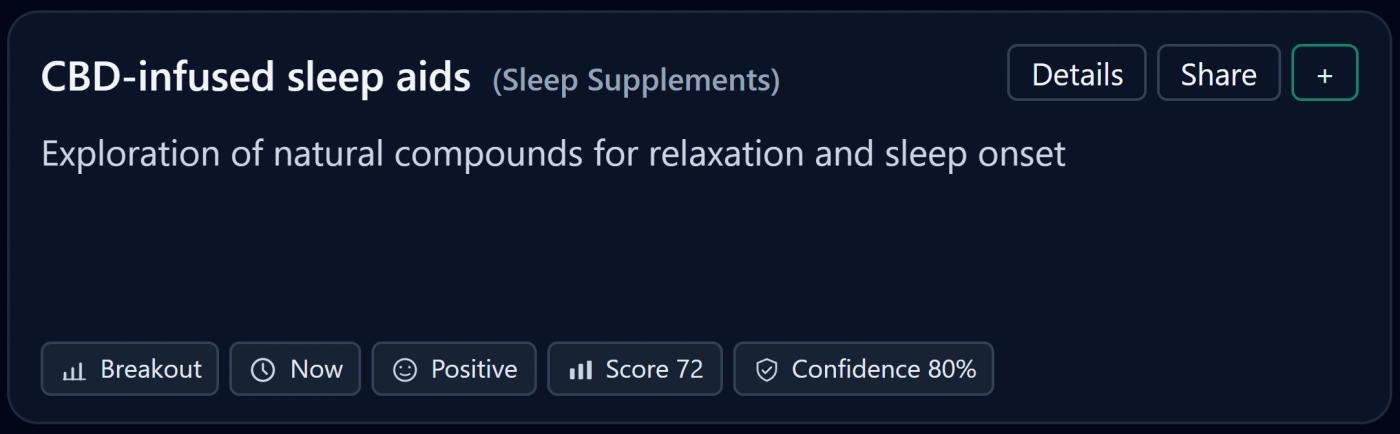
Category: Sleep Supplements
CBD sleep products are still in breakout mode—driven by consumer demand for “natural” relaxation support—but the evidence landscape is maturing.
Recent reviews and meta-analyses emphasize a consistent theme: interest is high, results are mixed, and higher-quality trials are still needed to establish who benefits most and at what doses. Springer+2ScienceDirect+2
Why it matters: The next phase of this trend won’t be hype—it’ll be standardization (dose, formulation, quality testing) and sharper positioning (sleep onset vs. anxiety-related sleep disruption vs. pain-linked sleep issues).
3) Eco-Friendly and Specialty Mattresses
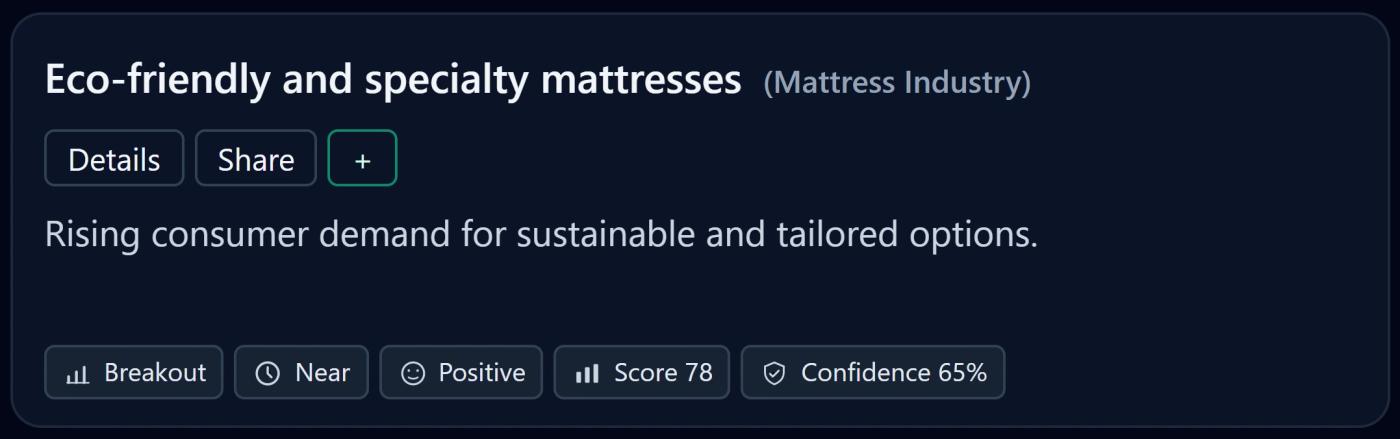
Category: Mattress Industry
Mattress buying is becoming values-driven. Consumers are increasingly looking for:
- Low-tox / low-VOC materials
- Organic and responsibly sourced inputs
- Third-party certifications (and protection from greenwashing)
Certifications and transparency are becoming a core trust signal—especially as buyers compare foam, latex, wool, and hybrid builds. Tom's Guide
Why it matters: Sustainability is no longer a niche premium layer—it’s becoming part of the baseline decision framework for sleep products, similar to “clean” in skincare.
4) Sleep Hotels and “Sleep Tourism”
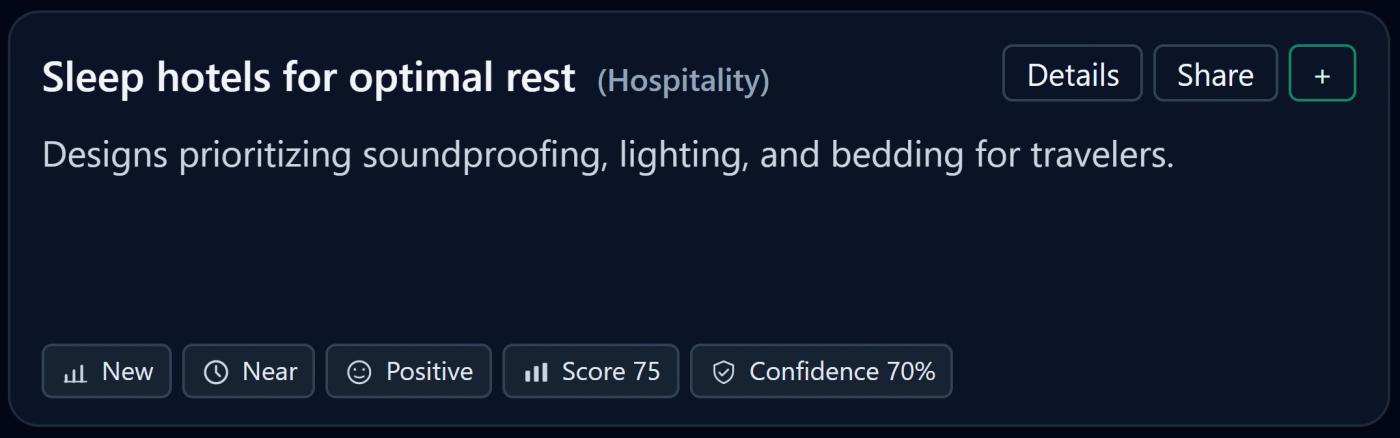
Category: Hospitality
Hotels are increasingly competing on rest—not just location.
Sleep-first rooms and programs are built around:
- soundproofing + blackout design
- circadian lighting considerations
- premium bedding and pillow menus
- temperature control + air quality upgrades
- sometimes even sleep coaching or trackers
The broader “sleep tourism” category is gaining enough momentum that market researchers are now sizing and forecasting it, and major hotel brands are openly prioritizing rest-and-recharge travel experiences. Grand View Research
Why it matters: Sleep is becoming a hospitality feature and a reason to travel. That creates new partnership surfaces across bedding, wearables, supplements, lighting, and recovery services.
5) Sleep Regularity as a Key Health Biomarker
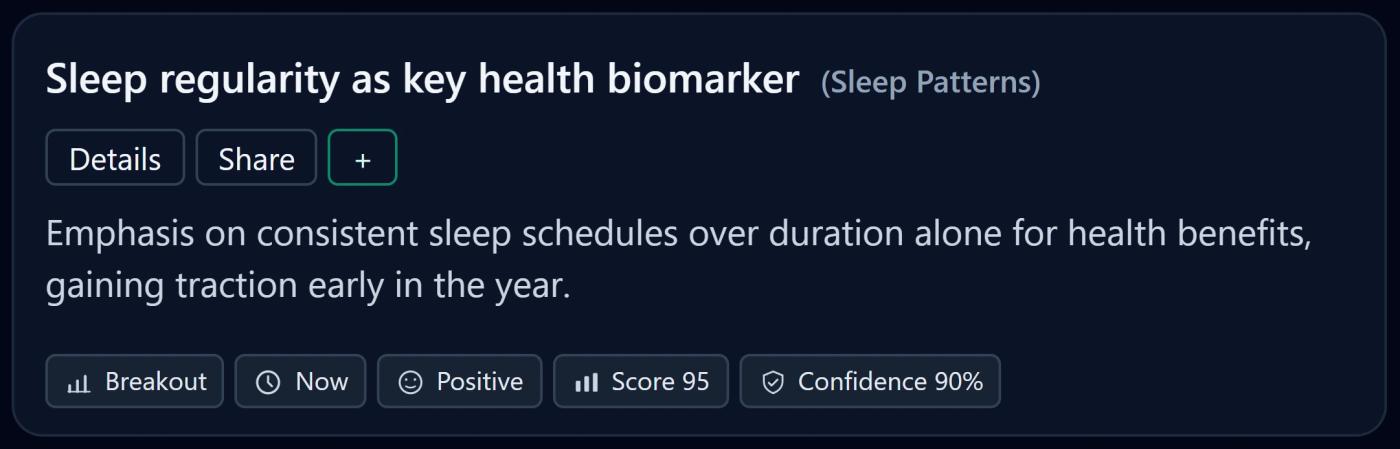
Category: Sleep Patterns
For years, sleep duration dominated the conversation. Now the spotlight is shifting to sleep regularity—how consistent your sleep and wake times are day to day.
Large cohort research suggests sleep regularity can be a strong predictor of mortality risk, in some analyses outperforming sleep duration. OUP Academic
Why it matters: This is a behavioral unlock. “Go to bed at the same time” is simpler (and often more actionable) than chasing perfect sleep duration—so products and platforms are increasingly designed around consistency.
6) GLP Drugs Resolving Sleep Apnea
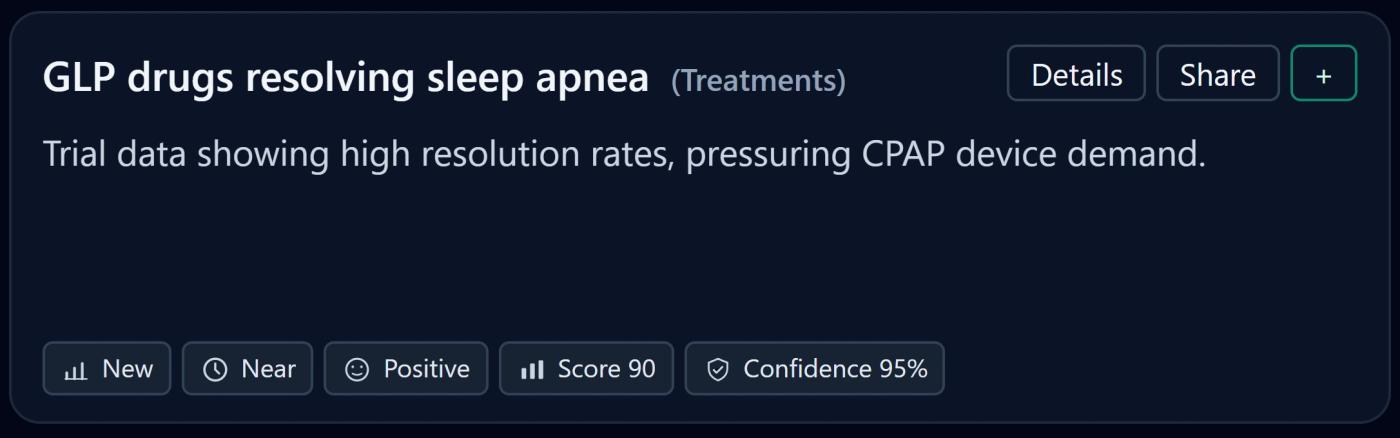
Category: Treatments
This is one of the biggest structural shifts in sleep medicine in years.
In late 2024, the FDA announced approval of the first medication for moderate-to-severe obstructive sleep apnea in adults with obesity, based on phase 3 trial evidence. U.S. Food and Drug Administration
This isn’t just a new option—it’s a market pressure event. If more patients can treat OSA through medication + lifestyle change, it will influence:
- CPAP demand dynamics
- diagnosis behavior
- payer coverage decisions
- long-term care pathways
Why it matters: Sleep apnea may shift from being treated primarily as a device-first condition to a multi-modal metabolic condition, changing the entire ecosystem.
7) Home Sleep Apnea Testing Devices Market Expansion
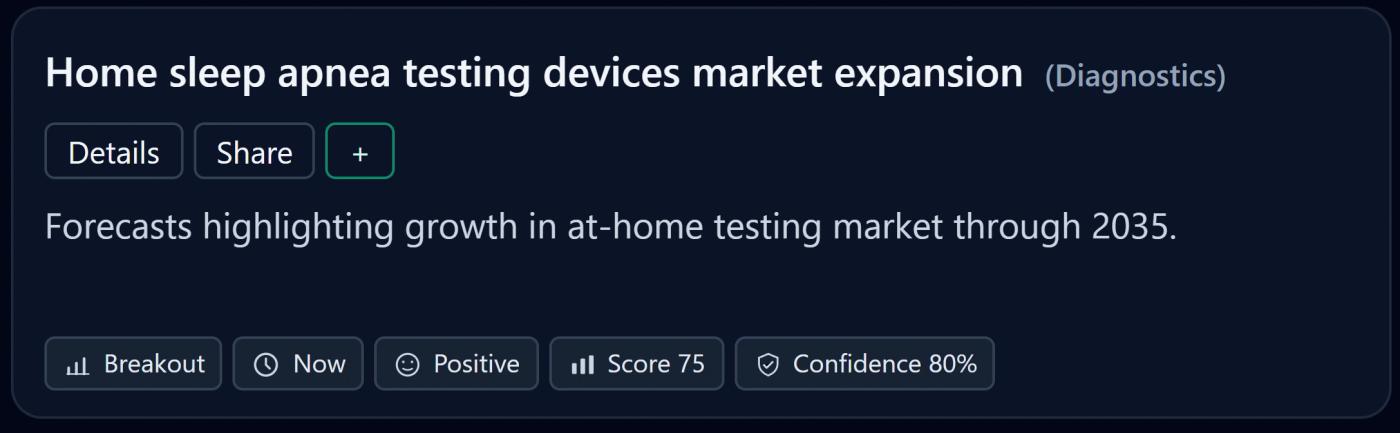
Category: Diagnostics
As awareness of sleep apnea rises, the diagnostic pathway is shifting toward at-home testing.
HSAT (home sleep apnea testing) is positioned as a practical alternative for appropriate patient populations, and market projections reflect steady growth over the coming years. AASM
Why it matters: Easier diagnosis increases category throughput. More testing means more treatment starts—whether that’s CPAP, oral appliances, surgery, lifestyle changes, or now medication.
Sleep Is Becoming a Full-Stack Category
These trends point to one macro shift: sleep is no longer a single product category. It’s becoming a full-stack system—hardware, diagnostics, therapeutics, hospitality, and daily behavior design.
The winners in sleep won’t just sell “better sleep.” They’ll build:
- measurable outcomes
- trust (clinical, regulatory, certification)
- personalization
- and frictionless habit formation