The diet landscape is evolving fast—driven by personalization, metabolic science, chronic condition management, and the growing overlap between food, technology, and medicine.
Based on Superway’s trend intelligence, here are eight diet trends gaining traction right now, and why they matter for consumers, brands, and the future of nutrition.
1. Anti-Inflammatory Foods for Chronic Condition Management

As chronic conditions like arthritis, IBS, and cardiovascular disease become more prevalent, anti-inflammatory eating has moved from niche wellness circles into the mainstream. Consumers are increasingly turning to food as a long-term tool for symptom management rather than short-term fixes.
Ingredients such as turmeric, omega-3–rich fish, berries, leafy greens, and fermented foods are being positioned as functional staples that support immune health and reduce systemic inflammation.
Tags
Stage: Mainstream · Horizon: Long · Sentiment: Positive
Subtopics
- Turmeric & curcumin
- Omega-3 fatty fish
- Antioxidant berries
- Leafy greens
- Fermented foods
Keywords
anti-inflammatory diet, inflammation fighting foods, chronic inflammation foods, turmeric benefits, omega-3 foods, functional nutrition
2. Organic Produce in Balanced Diets

Organic food consumption continues to rise as consumers associate food quality with long-term health and sustainability. Rather than fully organic diets, many are now selectively prioritizing organic produce—especially fruits and vegetables most associated with pesticide exposure.
This pragmatic approach reflects growing awareness of both nutritional value and affordability, making organic eating more accessible and sustainable over time.
Tags
Stage: Mainstream · Horizon: Near · Sentiment: Positive
Subtopics
- Nutritional density
- Sustainable agriculture
- Clean eating habits
- Cost-effective organic choices
- Local and seasonal sourcing
Keywords
organic produce, balanced diet, clean eating, organic vegetables, sustainable nutrition, farm fresh foods
3. Mediterranean Diet Variations for Cognitive Benefits
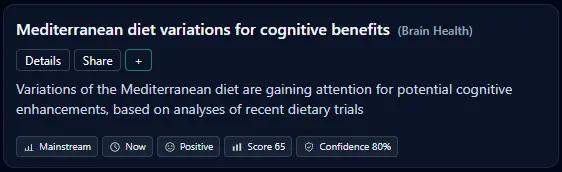
The Mediterranean diet is being reimagined through the lens of brain health. Variations like the MIND diet emphasize foods linked to cognitive longevity, including berries, leafy greens, nuts, olive oil, and omega-3s.
Instead of strict adherence, consumers are adopting flexible Mediterranean-inspired frameworks focused on memory, focus, and long-term neurological resilience—particularly among aging populations.
Tags
Stage: Nascent · Horizon: Long · Sentiment: Positive
Subtopics
- MIND diet protocol
- Omega-3–enriched Mediterranean plans
- Berry-forward adaptations
- Intermittent fasting hybrids
- Nut- and olive-oil–focused diets
Keywords
Mediterranean diet, MIND diet, brain health nutrition, cognitive longevity diet, neuroprotective foods
4. Keto Adaptations for Sustainable Weight Management
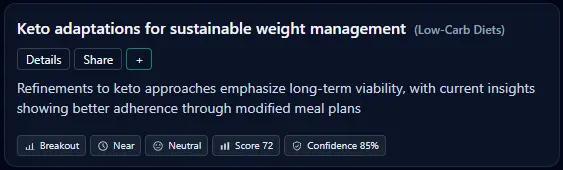
While keto remains popular, consumers are moving away from rigid long-term ketosis. In its place, more flexible keto adaptations—such as cyclical and targeted keto—are gaining traction.
These approaches aim to maintain metabolic benefits while improving sustainability, nutrient intake, and adherence, especially for people combining low-carb eating with exercise.
Tags
Stage: Nascent · Horizon: Long · Sentiment: Positive
Subtopics
- Cyclical keto
- Targeted keto
- Carb cycling
- Nutrient optimization
- Exercise-integrated keto
Keywords
sustainable keto, keto adaptations, cyclical keto diet, long-term weight loss, metabolic flexibility
5. Personalized Health Tracking in Weight Loss
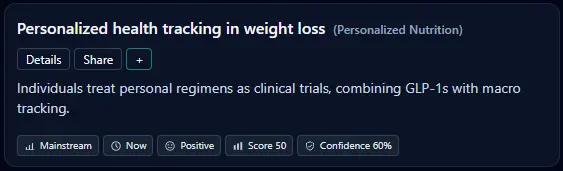
Dieting is becoming increasingly data-driven. Wearables, AI-powered apps, and biometric tracking tools are enabling users to personalize nutrition based on sleep, activity, recovery, and metabolic rate.
Rather than static calorie goals, consumers are embracing adaptive diets that respond to real-time feedback—improving consistency and long-term outcomes.
Tags
Stage: Breakout · Horizon: Near · Sentiment: Positive
Subtopics
- AI-driven nutrition planning
- Wearable biometric tracking
- Metabolic personalization
- Gamified progress tools
- Adaptive calorie targets
Keywords
personalized weight loss, biometric diet tracking, AI nutrition apps, wearable health data, smart dieting
6. GLP-1 Influence on Diet and CPG Strategies
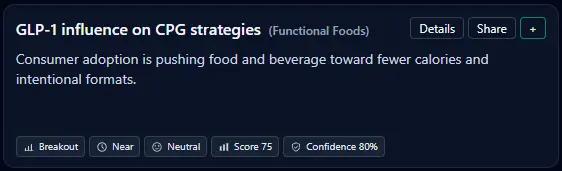
The rapid rise of GLP-1 medications like Ozempic and Wegovy is fundamentally changing eating behaviors. Reduced appetite and portion sizes are pushing consumers toward nutrient-dense, protein-forward foods.
In response, CPG brands are reformulating products, resizing portions, and adjusting messaging to meet the needs of GLP-1 users—reshaping the broader diet ecosystem.
Tags
Stage: Breakout · Horizon: Near · Sentiment: Positive
Subtopics
- Portion control innovation
- Product reformulation
- GLP-1–friendly nutrition
- Protein-forward foods
- CPG strategy shifts
Keywords
GLP-1 diet trends, Ozempic food impact, Wegovy nutrition, weight loss drugs and diet, CPG reformulation
7. Gut-Brain Wellness Focus

Growing research around the gut-brain axis is influencing how people think about diet and mental health. Foods that support the microbiome—such as fermented foods and probiotics—are increasingly associated with mood regulation and cognitive performance.
This trend positions gut health as foundational not just for digestion, but for emotional and psychological well-being.
Tags
Stage: Nascent · Horizon: Near · Sentiment: Positive
Subtopics
- Gut-brain axis science
- Psychobiotics
- Microbiome-mood connection
- Fermented foods
- Probiotics for mental wellness
Keywords
gut brain axis, microbiome health, probiotics mental health, psychobiotics, gut wellness diet
8. Meal Sequencing as an Emerging Diet Trend

Meal sequencing focuses on the order foods are eaten—typically fiber, protein, and fats before carbohydrates—to stabilize blood sugar and reduce glucose spikes.
Popularized through social media and podcasts, this low-friction approach appeals to consumers seeking simple, behavior-based strategies without strict dietary rules.
Tags
Stage: Nascent · Horizon: Near · Sentiment: Positive
Subtopics
- Blood sugar stabilization
- Food order strategies
- Post-meal glucose control
- Integration with keto and IF
- Behavioral diet techniques
Keywords
meal sequencing, veggies first diet, blood sugar control foods, low glycemic eating, food order diet
Why These Diet Trends Matter
Together, these trends highlight a clear shift: diet is becoming more personalized, functional, and integrated with health technology and medicine.
At Superway, tracking these signals helps brands and builders understand not just what consumers eat—but how diet behaviors are evolving, and where the next opportunities will emerge.